Bao vs Bao Bun vs Steamed Bun: What’s the Difference?
“Bao,” “bao bun,” and “steamed bun” turn up side by side in menus, articles, and social posts, which raises a fair question: are these three different things? Mostly, no. In everyday English, the terms are used in overlapping ways, and switching between them usually doesn’t signal a different food — it signals a different writer.
The three terms at a glance
- Bao is the shortest form, borrowed directly from Chinese.
- Bao bun is the same word with “bun” added, often used to make the subject clearer to a reader who doesn’t already know the term.
- Steamed bun is the most descriptive of the three — it names the cooking method in plain English.
None of the three is more “correct” than the others. They’re different levels of explanation for the same general idea: a bun that’s cooked by steaming rather than baking.
Where banh bao fits in
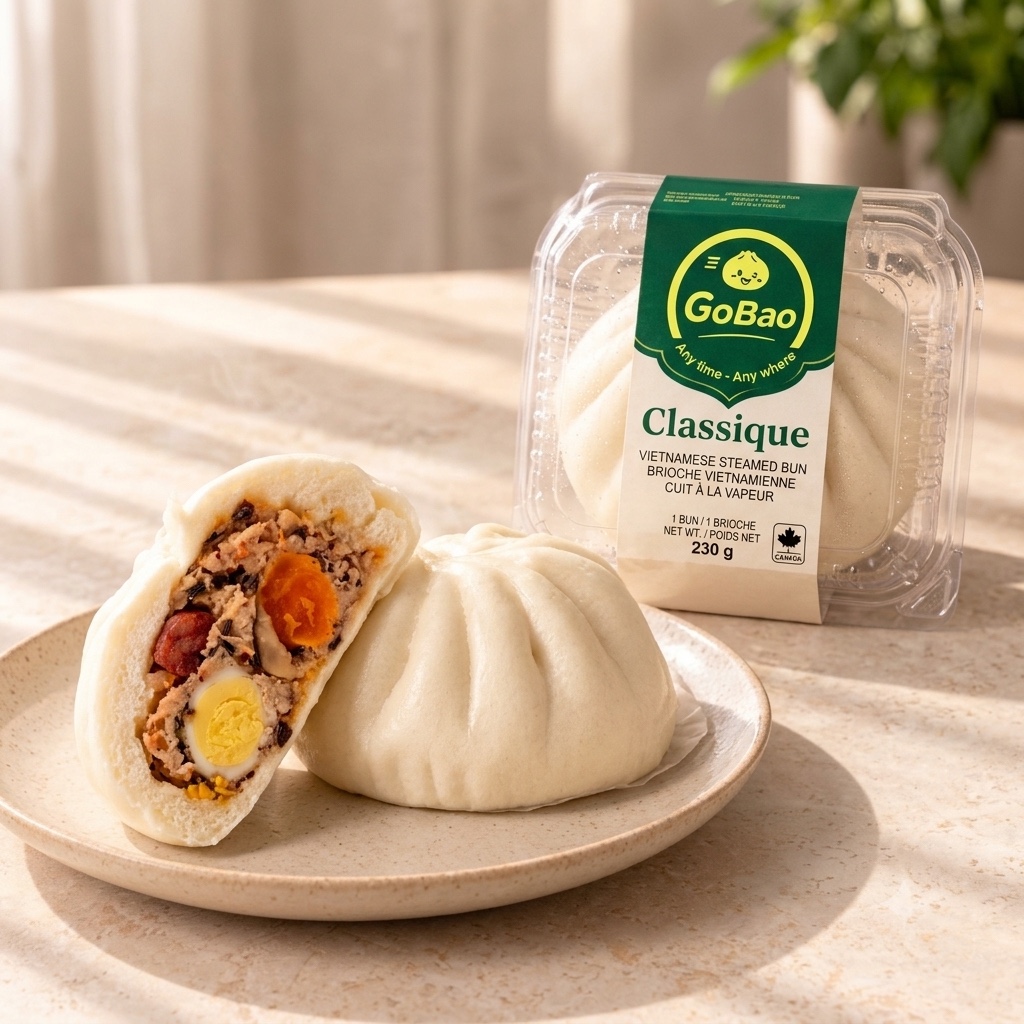
Banh bao is the Vietnamese name for one specific kind of steamed bun: a round, fully sealed bun with a savory filling, usually seasoned pork and often a piece of hard-boiled egg. When an English menu or post says “bao,” “bao bun,” or “steamed bun” about Vietnamese food, banh bao is frequently what’s being described. For the full breakdown of how it’s made and eaten, see What Is Banh Bao?
Why a name alone doesn’t tell you much
A name is a starting point, not a full description. It can sort a food into a rough category, but it can’t tell you what’s actually in it, how big it is, or how it’s meant to be stored or served. That information has to come from somewhere else — a product description, packaging, or the seller.
Two buns with different names on them aren’t necessarily different foods, and two buns with the same word in their name aren’t necessarily the same. The term labels the category; the rest is detail you have to look for.
A quick comparison
| Term | What it signals | What it doesn’t tell you |
|---|---|---|
| Bao | A steamed, filled bun, broadly speaking | Filling, size, origin, or whether a specific product is available |
| Bao bun | The same thing, spelled out for clarity | Filling, size, origin, or availability |
| Steamed bun | The cooking method, in plain words | What’s inside, or which regional style it is |
| Banh bao | A specific Vietnamese steamed bun, typically pork-filled | Exact filling, size, or whether a given product includes it |
How to read a bun’s name without guessing
- Separate the general term (“bao,” “steamed bun”) from any words that name a specific product or brand.
- Don’t assume the general term tells you the filling — check a description for that.
- If something isn’t stated, treat it as unknown rather than filling in a guess.
FAQ
Are bao, bao bun, and steamed bun the same thing?
In everyday English, yes, usually — the terms are used in overlapping ways to describe the same general food.
Is banh bao a type of bao?
Yes. Banh bao is the Vietnamese name for a specific style of steamed bun, closed around a savory filling before cooking.
Does the term in a name tell me what’s inside the bun?
No. It’s a category label. What’s inside is a separate question that a description or packaging needs to answer.