What Is Banh Bao? A Guide to Vietnamese Steamed Pork Buns
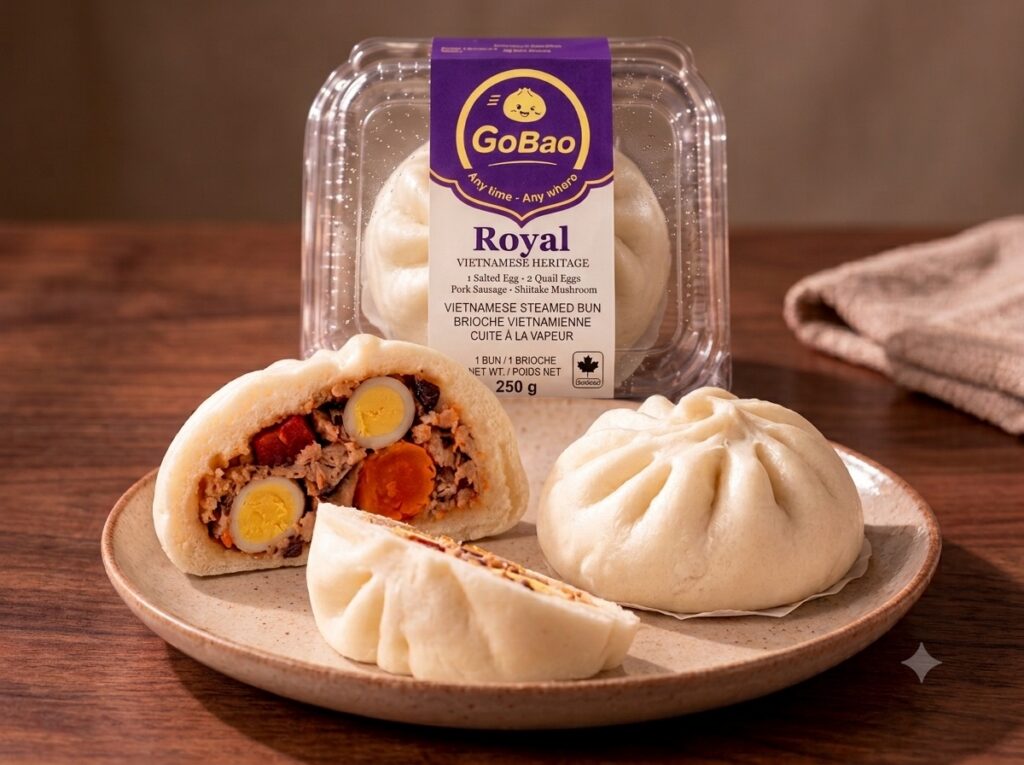
Banh bao (bánh bao) is a round Vietnamese steamed bun made from a soft, leavened wheat-flour dough wrapped around a savory filling — most often seasoned pork, with a hard-boiled egg added in many versions. The bun is cooked by steaming, which gives it its light, fluffy texture and pale colour.
What “bánh bao” means
In Vietnamese, bánh is a broad word for cakes, breads and other dough-based foods, and bao means “to wrap” or “to cover.” Together, bánh bao describes the bun itself: a piece of dough folded over a filling and sealed before steaming. The name reflects how the bun is made, not one specific recipe.
What banh bao is made of
A banh bao has two parts: the dough and the filling.
The dough is made from wheat flour, water, yeast and a little sugar, left to rise and then steamed rather than baked. Steaming keeps the surface pale and the inside soft and springy.
The filling is traditionally savory. The classic version uses seasoned ground pork with onion, and many versions also add a hard-boiled quail egg or chicken egg. Other common additions include wood ear mushroom, Chinese sausage, or salted egg yolk. Vegetarian versions swap the pork for vegetables and mushrooms.
Because recipes vary between makers, the exact filling depends on where and how the bun is made.
How banh bao is eaten
Banh bao is an everyday food rather than a special-occasion dish. In Vietnamese communities it is eaten for breakfast, as a snack, packed into lunchboxes, or bought from street stalls and markets. It is usually eaten warm after steaming.
A single banh bao can be a filling snack or a light meal on its own, depending on its size. It is often sold individually, wrapped and ready to eat on the go.
Banh bao, baozi and gua bao: a quick comparison
Three steamed buns are easy to confuse, so it helps to separate them:
- Banh bao (Vietnamese) — a round, closed bun with a savory filling, often pork and a whole egg inside.
- Baozi (Chinese) — a broad family of steamed filled buns with many shapes, sizes and fillings, both sweet and savory.
- Gua bao (Taiwanese) — a flat, folded-open steamed bun filled like a sandwich, often with braised pork belly.
This is only a quick orientation. The banh bao versus gua bao comparison gets its own article for the detail.
Vietnamese pork buns
When a menu or shop says “Vietnamese pork bun,” banh bao is usually what it means. The combination of steamed dough and seasoned pork filling is what sets Vietnamese pork buns apart from other pork buns. The added egg is a familiar sign too, though not every version includes one.
Where banh bao fits in Toronto and the GTA
Banh bao is a familiar part of the Vietnamese food scene across Toronto and the GTA, sold through Vietnamese markets, bakeries and food stalls. Where to find it, and what to check before buying, is covered in a separate local guide.
GoBao and Vietnamese steamed pork buns
GoBao is a Toronto-based brand of Vietnamese steamed pork buns. It makes a small line of pork buns built around the classic banh bao format — steamed dough and a savory pork filling.
To see the current GoBao products, visit the products page.
FAQ
Is banh bao the same as a dumpling?
Banh bao belongs to the wider family of filled, dough-based foods, but “dumpling” is too broad to describe it well. “Vietnamese steamed bun” or “banh bao” keeps the steamed, filled-bun idea clear.
Is banh bao always filled with pork?
Pork is the classic filling, but vegetarian versions exist, and recipes vary between makers.
Do all banh bao contain an egg?
Many do — a hard-boiled quail egg or chicken egg is common — but not every version includes one. Check the maker’s description for a specific bun.