What’s Inside a Banh Bao? Dough, Filling, and Egg Explained
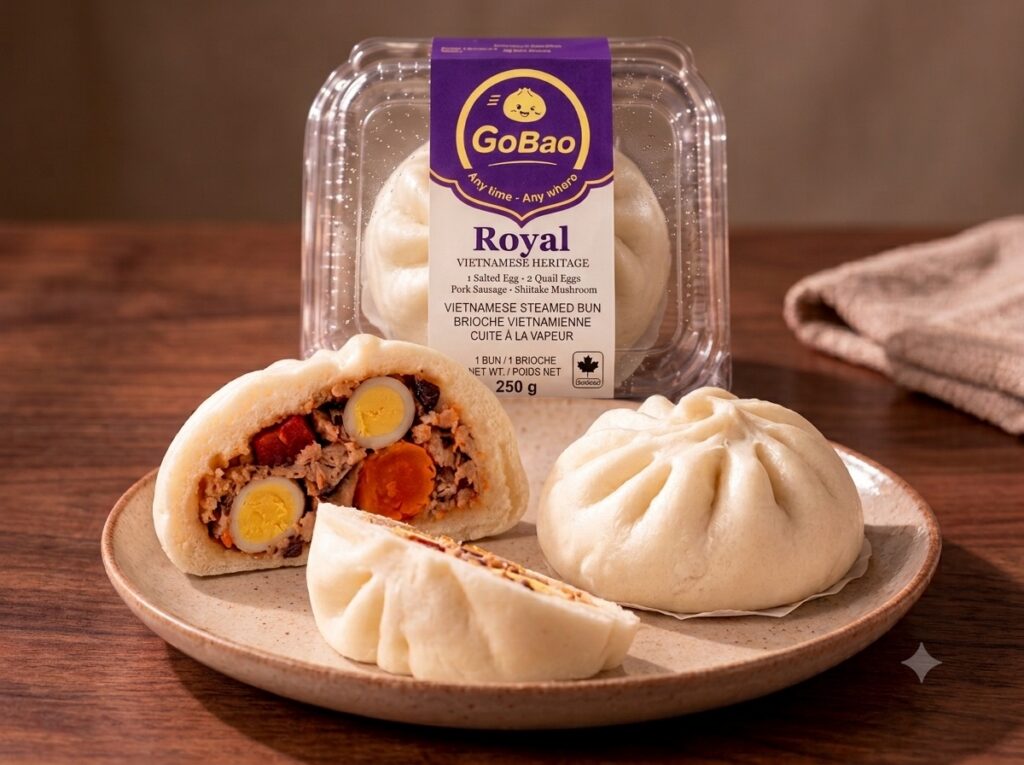
Cut open a banh bao and you’ll find two layers built to work together: a soft, pale steamed dough on the outside, and a savory filling on the inside. Here’s exactly what goes into each — the dough, the seasoned pork, the egg, and the add-ins that vary between makers.
What a banh bao is
Banh bao is a round, steamed wheat-flour bun filled with seasoned pork, often with a piece of hard-boiled egg inside. For the full story of what banh bao is and how it’s eaten, see What Is Banh Bao?
How it compares to other Asian pork buns
- Chinese baozi / char siu bao: A broad family of steamed buns with many shapes, sizes, and fillings. The pork version often uses barbecued (char siu) pork rather than seasoned ground pork.
- Taiwanese gua bao: A flat, folded-open bun filled with braised pork belly after steaming, rather than sealed inside before cooking. See the full banh bao vs gua bao comparison for more detail.
What sets banh bao apart
- The egg. Many versions include a piece of hard-boiled egg alongside the pork filling — a detail less common in other regional versions.
- The seal. The filling is fully enclosed in dough before steaming, giving a round, closed bun rather than an open or folded one.
- The everyday role. Banh bao is treated as an everyday food — breakfast, snack, lunchbox — rather than a special-occasion dish.
Filling variety
Seasoned pork is the classic filling, but variations exist, including versions with wood ear mushroom, Chinese sausage, or salted egg yolk, plus vegetarian versions that swap in vegetables and mushrooms. Recipes vary between makers, so the exact filling depends on where a given bun comes from.
The two parts: dough and filling
Every banh bao has two halves that matter.
The dough is a leavened wheat-flour dough made from flour, water, yeast, and a little sugar. It’s left to rise, then steamed rather than baked. Steaming keeps the surface pale and the interior soft and springy — a light, slightly sweet dough with no baked crust.
The filling is traditionally savory. The classic version uses seasoned ground pork with onion, and many makers add wood ear mushroom, Chinese sausage, or salted egg yolk.
How it’s eaten
Banh bao is meant to be eaten warm. It’s a single-serving food that needs no utensils, which is why it works so well on the go: breakfast on the way out, a mid-morning snack, or a quick bite from a market or bakery. It’s usually eaten whole, as one sealed piece, holding the filling inside.
Fresh vs frozen: what to check
Banh bao is sold in different forms depending on the maker. Some are sold fresh and refrigerated for short-term use; others are frozen for longer storage. The form changes how you store and reheat it, so check the package rather than assuming. GoBao’s buns are a fresh, refrigerated product kept at 0-4°C — if you’re reheating at home, see how to reheat banh bao.
Where to buy banh bao in Toronto
Banh bao is a familiar part of Toronto and the GTA’s Vietnamese food scene, sold ready-to-eat through Vietnamese bakeries and markets, packaged for reheating in grocery and Asian markets, and in bulk for catering and food-service. For a full local guide, see where to buy banh bao in Toronto.
FAQ
What’s inside a classic banh bao?
Seasoned ground pork, often with a hard-boiled quail or chicken egg, plus add-ins like wood ear mushroom, Chinese sausage, or salted egg yolk — sealed inside a soft steamed dough.
Does every Vietnamese pork bun have egg in it?
Many do, but not all. Check the specific product’s description for details.
How is banh bao different from a Chinese pork bao?
Banh bao is typically filled with seasoned ground pork (often with egg) and sealed before steaming, while Chinese char siu bao commonly uses barbecued pork across a wider range of shapes and styles.